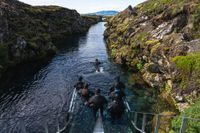
River
Reykjadalur Hot Spring River
Reykjadalur Hot Spring River river temperature is currently estimated as Very Cold. Serious cold. Cold shock risk is high. Experienced swimmers with proper kit only. Factors include groundwater baseline, solar radiation, wind, and river discharge.
Last updated:
Very Cold
Serious cold. Cold shock risk is high. Experienced swimmers with proper kit only.
Ground temperature is 7.1°C. Air has averaged 7.1°C today. 103mm of rain in the last 7 days may have cooled and clouded the water. The estimate is built from those two: the floor is ground temperature and the ceiling is air temperature, and the steps between them are ours rather than a published figure.
Derived from groundwater, air temperature, solar, wind, river flow, and snow. Not a direct measurement.
What to bring
Swum here recently?
Community temperature reports are the most reliable local data.
Add a temperature report →7-Day Forecast
Tap a day to update conditions
3.7°C
High 9.5° / Low 4.6°
Very cold air, water will feel brisk
7.1°C
54cm depth
Cool ground, moderate baseline temperature
Weak
14 W/m²
Very little sunshine, minimal surface warming
59 km/h
S, gusts 85
Strong S wind, significant surface cooling
-1.7°C
Feels like wet
Severe exit conditions. Risk of hypothermia after leaving the water. Be prepared.
103.3 mm
7-day total
103mm of rain in the last 7 days. Expect colder, more turbid water.
Estimates change with the weather. Always assess the water yourself before entering.
Frequently asked questions
How is the river water temperature estimated?
River temperature is estimated using a combination of indicators: soil temperature at 54cm depth (groundwater proxy), air temperature, solar radiation, wind speed, river discharge, and snow depth. This is a heuristic estimate, not a direct measurement or a calibrated physical model.
What do the temperature categories mean?
Each category covers a 4 degree C band derived from the estimated midpoint: Warm (20°C+, comfortable without wetsuit), Comfortable (16-20°C, most swimmers fine), Cool (12-16°C, wetsuit optional), Cold (8-12°C, wetsuit recommended), Very Cold (4-8°C, wetsuit essential), Ice Risk (below 4°C, experienced only).
How does river flow affect temperature?
Higher river discharge typically means colder water. Fast-flowing water has less time to warm from solar radiation, and high flows often indicate recent rainfall or snowmelt. Low flows in summer allow the water to warm more.
How does snow affect river temperature?
Snow depth in the catchment indicates potential snowmelt runoff. When snow is melting, rivers receive very cold water that can significantly lower the temperature. This indicator is most relevant in winter and spring.
How accurate is this estimate?
Indicator-based estimates are typically accurate to within 2-4 degrees C. Accuracy depends on river size, flow conditions, and local factors like shading and tributaries. Community temperature reports from swimmers provide the most reliable local data.