Beach
Cala Ginesta
Photos of Cala Ginesta
Today at Cala Ginesta
26.5°C
WarmWarm for open water. Sun exposure and dehydration are the main risks at this temperature.
Copernicus Marine (Satellite) · the label is our plain summary of the numbers, not advice
Before you go
Reviews
No reviews yet. Be the first to share your experience.
Write a reviewAbout
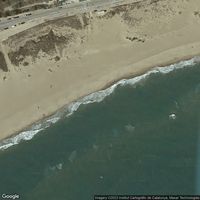
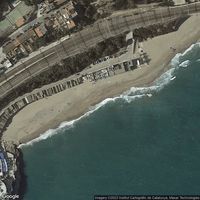
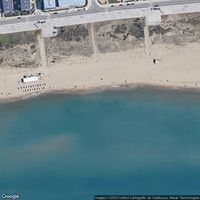
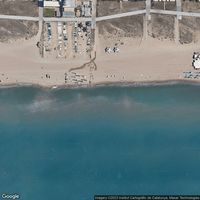
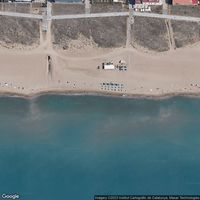
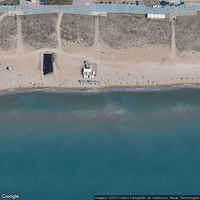
A small, sheltered cove (about 200m long) wedged between Port Ginesta marina and the cliffs of the Garraf Natural Park, roughly midway between Sitges and Castelldefels. Waters are generally calm and clear, and the swimming area is buoyed out to 200m with no boat channel crossing it, so it's reasonably protected from the marina's traffic once you're past the entrance. Cliff-fed freshwater seeps on the seabed can create occasional cooler pockets. Access is on foot only, a 5-10 min walk from the Port Ginesta car park (paid) or through the marina interior; no direct road, bus, or train access. Facilities are minimal and mostly unstaffed. Outside the lifeguard season there is only a basic SOS point, 3 WCs, and 1 shower — no lifeguard cover, no Blue Flag. Lifeguard service (a basic intervention chair, not a full tower) runs June 15 – September 23. The Punta Roca chiringuito restaurant operates a longer season, roughly May to October, but overlaps only partially with lifeguard coverage.
Location
What swimmers say
Facilities
Activities
Help verify this spot
Sign in to help verify details about this spot.
Been here recently?
Share conditions, tips, or hazards to help other swimmers plan their visit to Cala Ginesta.
Share an updateFrequently asked questions
Is this beach safe for swimming?
Check the Conditions tab for current wave height, swell and wind. Review the Quality tab for the latest Environment Agency classification. Always read recent community reports for local knowledge.
When is the best time to swim here?
Check the Tides tab for today's high and low times. Many coastal spots are best around high tide when there's enough water depth, or during slack water when currents are weakest.
What should I bring?
A tow float for visibility, warm layers for after, and footwear for rocky entries. In colder months, consider a wetsuit, gloves, and a swim cap.
What should I know before swimming here?
Check tide times before entering. Incoming tides can cut off escape routes. Watch for rip currents, especially near groynes and headlands. Cold water shock is real. Enter slowly and control your breathing. Always swim with others or tell someone your plan. A tow float makes you visible to boats and other water users. Conditions change fast. Always check the latest data, read recent community reports, and swim within your ability.